

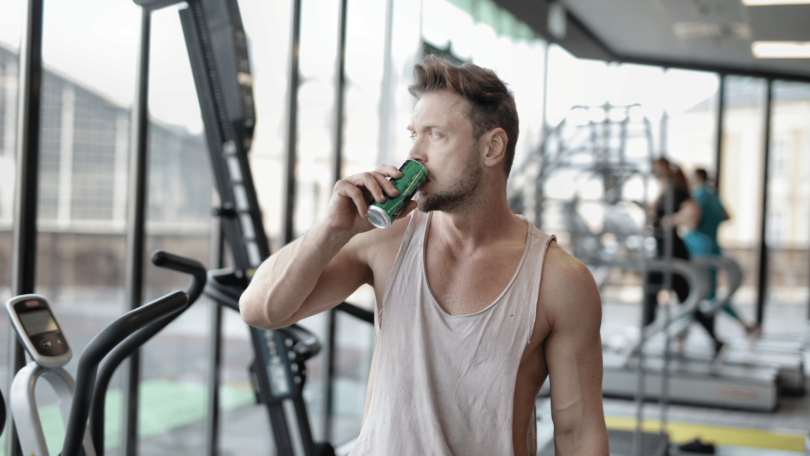
“Bang delivers stimulation, not supplementation.”
When Bang Energy burst onto the fitness scene, it promised more than a caffeine rush—it promised performance. The brightly colored cans and bold “Super Creatine” branding made it a staple in gyms, supplement shops, and locker rooms worldwide.
But in 2025, the U.S. Court of Appeals for the Eleventh Circuit upheld a verdict confirming what scientists and competitors had long argued: “Super Creatine” was not real creatine (Court of Appeals for the Eleventh Circuit, 2025). By that point, Bang’s parent company, VPX/Vital Pharmaceuticals, had gone bankrupt, and Monster Beverage Corporation purchased the brand for US$362 million (Monster Beverage Corporation, 2023).
The can still packs 300 milligrams of caffeine—but the myth of creatine-enhanced energy has been legally dismantled.
A Legal Knockout and a Corporate Takeover
Bang’s legal downfall unfolded over years of scrutiny and litigation. The 2025 appellate decision upheld a multimillion-dollar judgment that ruled the company’s “Super Creatine” claims were false and misleading (Reuters Staff, 2025).
“Monster’s acquisition signaled both rescue and reckoning for one of the industry’s flashiest brands.”
Once synonymous with flashy performance marketing, Bang now exists under the quieter, corporate umbrella of Monster. The new owner retained its caffeine-heavy formula but dropped all reference to creatine from labels and advertising (Monster Beverage Corporation, 2023).
A Caffeine Surge Like No Other
Each 16-ounce (473 mL) can of Bang contains 300 mg of caffeine, roughly equivalent to three strong cups of coffee and about 75% of the FDA’s daily safe upper limit for healthy adults (FDA, 2023).
Caffeine appears in the anhydrous form, a dehydrated powder absorbed rapidly by the body. Research shows it can improve endurance, sharpen focus, and reduce perceived exertion during high-intensity exercise (Spriet, 2014). However, excessive intake can elevate heart rate, provoke anxiety, and delay sleep onset (Spriet, 2014).
“One can of Bang delivers 300 mg of caffeine—three-quarters of the FDA’s recommended daily ceiling.”
For athletes, timing is critical. Consuming caffeine more than six hours before bedtime helps minimize sleep disruption (Spriet, 2014).
Creatine Claims Collapsed
For years, Bang promoted its proprietary “Super Creatine,” a compound called creatyl-L-leucine. The company claimed it was a superior, water-stable form of creatine, but scientific analysis found it did not convert efficiently to creatine phosphate in the body (Trexler, Smith-Ryan, & Stout, 2015).
The courts agreed. In 2025, the Eleventh Circuit upheld that “Super Creatine” marketing misrepresented the product’s contents (Court of Appeals for the Eleventh Circuit, 2025). As a result, Bang now contains no meaningful creatine at all.
Sports nutritionists continue to recommend 3–5 grams of creatine monohydrate per day to enhance muscle strength, power output, and lean mass (Trexler et al., 2015). No ready-to-drink energy product currently offers that clinically effective dose.
“If you want creatine’s proven benefits, you’ll need to supplement separately.”
EAAs and CoQ10: Underdosed and Undisclosed
Bang continues to advertise essential amino acids (EAAs) and Coenzyme Q10 (CoQ10) on its ingredient panel. However, these compounds appear in undisclosed quantities, and without dosage data, it is impossible to assess efficacy.
Typical EAA benefits require around 6–10 grams per serving, while research-backed CoQ10 effects begin around 100–200 mg daily—amounts far higher than what most energy drinks include (Trexler et al., 2015; Spriet, 2014).
As nutritionist commentary has noted, these ingredients likely appear “for label appeal, not performance” (Nutrition Insider, 2023).
“If a can doesn’t disclose the dose, assume the dose doesn’t deliver.”

Regulatory Reality Check: Australia and New Zealand
In Australia and New Zealand, energy drinks are subject to Food Standards Code 2.6.4, which limits caffeine in formulated caffeinated beverages to 320 mg per litre (Australian Government Department of Health, 2023).
By comparison, a standard U.S. can of Bang contains 300 mg in 473 mL, or approximately 634 mg per litre—nearly double the legal maximum. Consequently, Bang cannot be legally sold through normal Australian retail channels, and imported cans have previously been seized by authorities (Australian Government Department of Health, 2023).
This discrepancy highlights how global regulations diverge, often catching unaware athletes and supplement users off guard.
Performance Edge or Overstim?
For some athletes, Bang can function as a pre-workout stimulant. Taken 30–60 minutes before training, caffeine can improve mental alertness and endurance performance (Spriet, 2014). Yet timing and tolerance matter.
Caffeine consumed too late in the day can reduce sleep duration and quality, impairing recovery and muscle adaptation (Spriet, 2014). Experts consistently recommend keeping total daily caffeine intake below 400 mg (FDA, 2023)—meaning one can of Bang leaves little margin for additional coffee or pre-workout formulas.
A Brand Reborn Under Monster
Since its 2023 acquisition, Monster Beverage Corporation has repositioned Bang within its performance portfolio. While the neon branding remains, the exaggerated supplement claims have vanished.
“Bang’s formula is still fierce—but now it’s honest.”
Industry analysts describe Monster’s move as a dual play: salvaging a recognizable brand while distancing it from VPX’s legal baggage (Bloomberg News, 2023). Bang remains a high-caffeine, sugar-free option—but no longer masquerades as a muscle-building drink.
Bottom Line
Bang Energy today is a stimulant beverage, not a supplement. Its 300 mg caffeine load provides a potent pre-training boost, but it offers no legitimate creatine or amino acid advantage. The brand’s transformation from VPX’s “Super Creatine” marketing to Monster’s minimalist formula represents a rare case of legal correction within the energy drink sector.
“Bang still hits hard—but it no longer pretends to build muscle.”
Takeaway
Bang Energy remains potent but pared down. Its 300 mg caffeine dose provides focus and drive, yet its creatine claims are history, legally and scientifically. The modern athlete should treat Bang as a stimulant beverage only, not a shortcut to muscle growth or recovery.
References
Australian Government Department of Health. (2023). Australia New Zealand Food Standards Code – Standard 2.6.4: Formulated Caffeinated Beverages. Food Standards Australia New Zealand.
Bloomberg News. (2023, July 3). Monster Beverage buys Bang Energy out of bankruptcy for $362 million. Bloomberg L.P.
Court of Appeals for the Eleventh Circuit. (2025). Vital Pharmaceuticals, Inc. v. Monster Energy Company (No. 22-12286). United States Court of Appeals.
Food and Drug Administration. (2023, March 24). Spilling the Beans: How Much Caffeine Is Too Much? U.S. Department of Health and Human Services.
Monster Beverage Corporation. (2023, July 3). Monster Beverage completes acquisition of Bang Energy brand. [Press release].
Nutrition Insider. (2023, July 5). Bang Energy’s “Super Creatine” claims found false; rebranding follows Monster acquisition.
Reuters Staff. (2025, April 12). Appeals court upholds verdict against Bang Energy for false creatine claims. Reuters.
Spriet, L. L. (2014). Exercise and sport performance with low doses of caffeine. Sports Medicine, 44(S2), 175–184. https://doi.org/10.1007/s40279-014-0257-8
Trexler, E. T., Smith-Ryan, A. E., & Stout, J. R. (2015). Creatine and caffeine in sports nutrition: current research perspectives. Journal of the International Society of Sports Nutrition, 12(1), 1–9. https://doi.org/10.1186/s12970-015-0092-9