
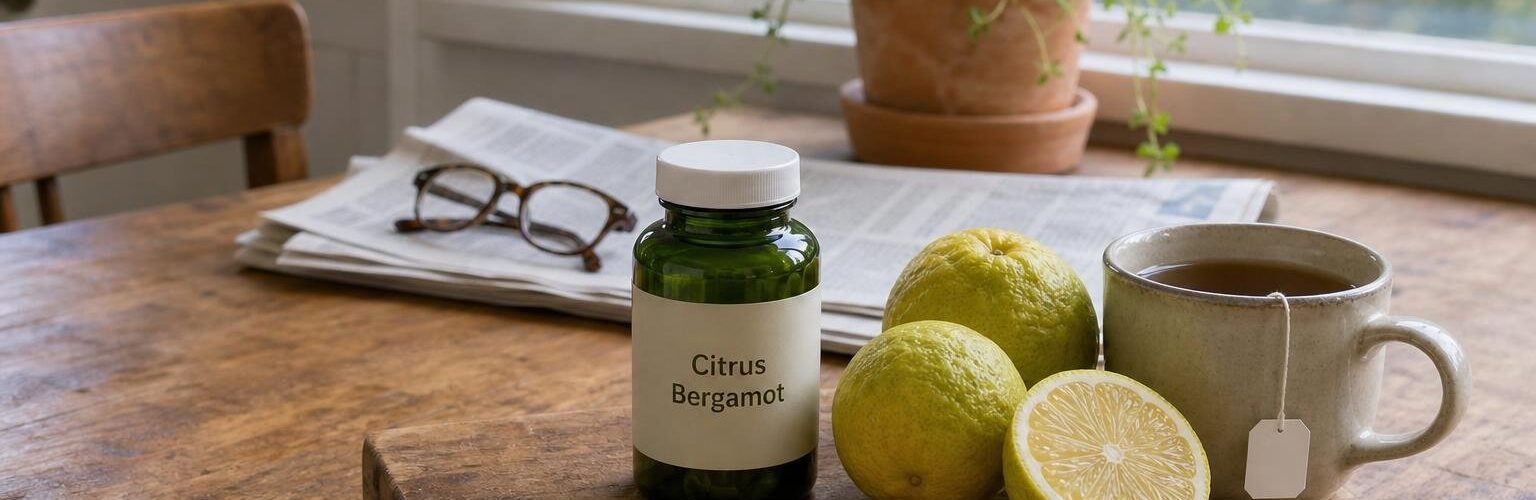
Summary: Citrus bergamot is a sour, orange-sized citrus fruit grown mainly in southern Italy, best known as the flavor in Earl Grey tea. Supplements made from its juice lowered cholesterol in a series of small trials, but most of those trials were short, came from a few Italian research groups and were judged at high risk of bias, so the evidence is rated low to very low certainty. Claims for blood sugar, weight loss, stress and inflammation rest on evidence that’s as weak or weaker.
Citrus bergamot supplements are sold as a natural way to lower cholesterol, often for people who don’t want to take a statin. You’ll also see bergamot essential oil sold for stress and sleep. Here’s what the research on citrus bergamot actually shows, how strong it is, and what to know about safety.
What is citrus bergamot?
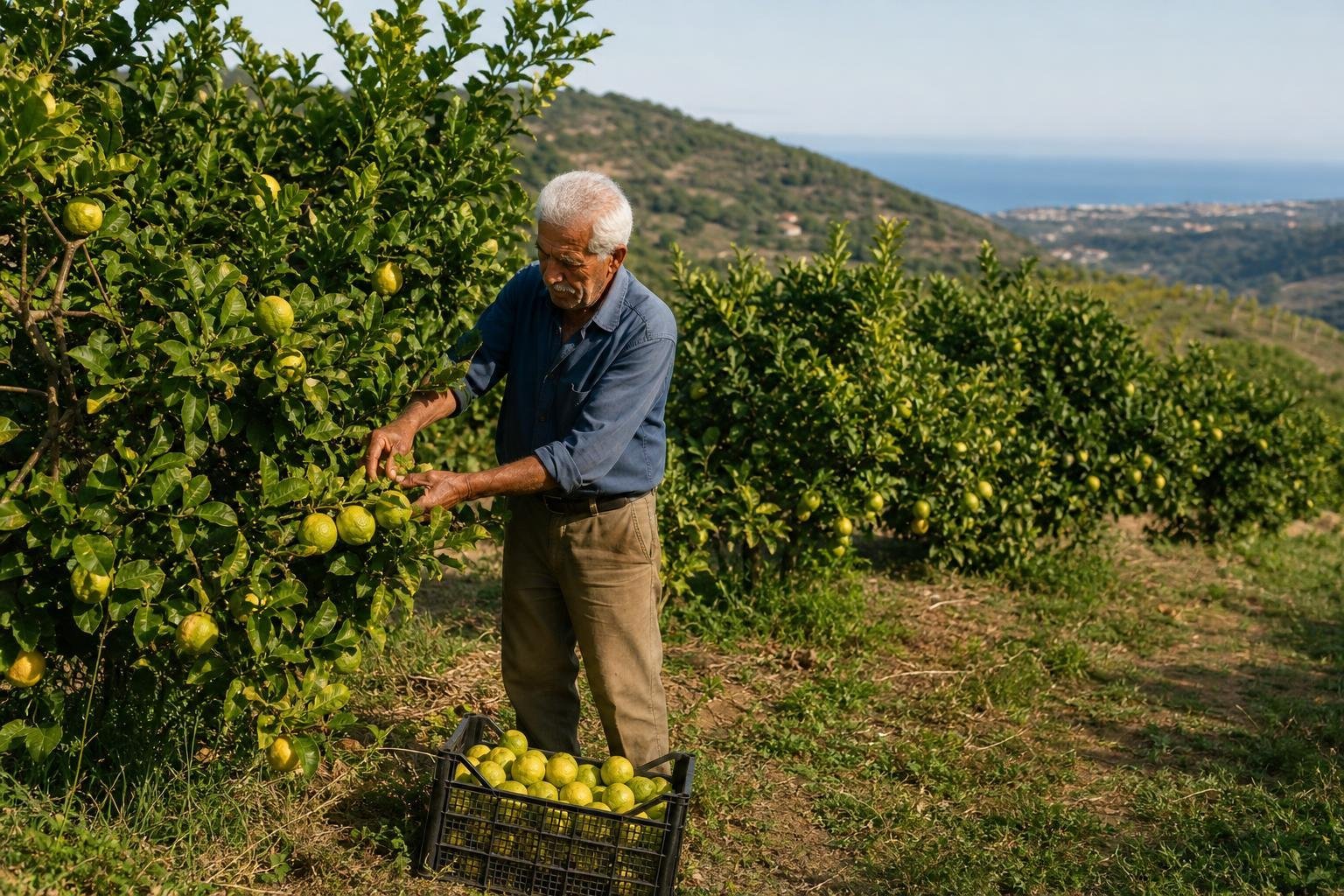
Bergamot (Citrus bergamia) is a citrus fruit with a yellow peel, about the size of an orange. It’s thought to be native to Southeast Asia, but about 80% of the world’s bergamot is grown in Calabria, in southern Italy [1]. It’s used mainly for its essential oil, juice and extracts [1], and it’s what gives Earl Grey tea its flavor [2].
It helps to know there are two very different bergamot products:
- Bergamot extract (capsules or tablets). Made from the juice and inner peel, and rich in flavonoids, plant compounds such as naringin, neohesperidin and neoeriocitrin. Many supplements use a standardized version called bergamot polyphenolic fraction, or BPF (polyphenols are the wider family of plant compounds that flavonoids belong to) [1][2][3]. This is the form tested for cholesterol.
- Bergamot essential oil. Used in aromatherapy (breathing in the scent). It has a different makeup, including small amounts of compounds called psoralens [1], which can make skin react badly to sunlight (more on this below).
Does citrus bergamot lower cholesterol?
This is the main reason people take citrus bergamot, and it’s where most of the human research is. The short answer: trials mostly point toward lower cholesterol, but the quality of those trials is a real problem.
The early study that put bergamot on the map came from a research group in Calabria. In 2011 they reported that 237 people with high cholesterol (some also with high blood sugar) who took BPF for 30 days had lower total and LDL cholesterol (the “bad” cholesterol linked to heart disease), lower triglycerides (a type of blood fat) and lower blood sugar [3]. The same paper included rat experiments.
Since then, more trials have been pooled in reviews:
- A 2020 systematic review (a structured summary of all the studies on a question) found 12 human studies. Most reported lower total cholesterol (by 12% to 31%) and LDL cholesterol (by 8% to 41%), but the authors noted the studies had different designs and “quite limited” scientific quality [4].
- A 2026 meta-analysis (a study that pools the results of many trials) included 9 randomized controlled trials with 615 people, all from Italy except one from China. On average, LDL cholesterol was about 40 mg/dL (about 1 mmol/L) lower with bergamot than with the comparison group. But the results varied hugely from trial to trial, six of the nine trials were rated poor quality, and the certainty of the evidence was rated low to very low for every outcome. The authors said the findings “should not be interpreted as establishing the clinical efficacy of bergamot” [5].
The individual trials show why caution makes sense:
- A 6-month study with no comparison group. In 80 adults with moderately high cholesterol, a bergamot extract providing 150 mg of flavonoids a day lowered LDL cholesterol from 4.6 to 3.7 mmol/L (about 178 to 143 mg/dL) [6]. Without a placebo group, it’s hard to know how much of that was due to the supplement.
- The best-rated trial showed a smaller effect. The only trial the 2026 meta-analysis rated as good quality gave 64 overweight adults with mildly high cholesterol either a bergamot phytosome (bergamot extract bound to lecithin to help absorption, one 500 mg tablet twice a day) or a placebo for 12 weeks [2][5]. Total and LDL cholesterol fell more than with placebo: in the bergamot group, LDL went from about 156 to 146 mg/dL, while in the placebo group it rose by about 9 mg/dL (161 to 171), so part of the gap came from the placebo group getting worse. HDL cholesterol, triglycerides, blood sugar and insulin didn’t change compared with placebo. Three of the authors worked for Indena, the company that supplied the tablets [2].
- With a statin. In a 30-day study of 77 people, adding 1,000 mg a day of BPF to a 10 mg dose of the statin rosuvastatin lowered cholesterol more than the statin alone [7]. Only 15 people were in that combined group, and the study was open-label, meaning participants and researchers knew who was taking what.
None of the trials in the latest meta-analysis measured heart attacks or strokes; they only measured blood tests and other short-term markers [5]. Statins have that evidence; bergamot doesn’t. If your cholesterol is high, talk to your doctor before choosing a supplement over (or alongside) a prescribed medicine. For another plant-based option with stronger evidence, see our article on beta-sitosterol and plant sterols.
Citrus bergamot for blood sugar and blood pressure
Several of the cholesterol trials also measured blood sugar. In the 2026 meta-analysis, fasting blood sugar was about 12 mg/dL (about 0.7 mmol/L) lower with bergamot, and insulin resistance (how poorly the body responds to insulin) was slightly lower. Systolic blood pressure (the top number) was about 2 mmHg lower, but only two trials with 150 people measured it. All of these results were rated low or very low certainty [5]. In the best-rated trial, blood sugar and insulin didn’t change compared with placebo [2].
So citrus bergamot isn’t a proven way to manage blood sugar, and it isn’t a substitute for diabetes or blood pressure treatment.
Does citrus bergamot help with weight loss?
Probably not in any meaningful way. When the 2026 meta-analysis pooled the trials, bergamot made no significant difference to body weight or BMI, and waist size was only about 1 cm smaller [5]. In the best-rated trial, weight and waist size didn’t change compared with placebo, although visceral fat (the fat around the organs, measured with a body scan) fell more than with placebo [2].
One small Italian trial reported a 14.8% drop in body weight over 90 days with a higher dose of a pectin-enriched bergamot product, but only 15 people per group finished it [8], and the meta-analysis rated it poor quality [5]. The claim that bergamot curbs hunger is based on the idea that its fiber could help [1]; we found no good human trials testing it. If you’re comparing weight loss supplements, our review of green coffee extract shows how often early promising results fade.
Antioxidant and anti-inflammatory claims
Bergamot flavonoids act as antioxidants (compounds that neutralize unstable molecules called free radicals) and reduce markers of inflammation in lab and animal studies [9]. That’s a reasonable starting point for research, but results in cells and rats often don’t carry over to people taking a capsule. There’s no good human evidence that citrus bergamot treats inflammatory conditions.
Bergamot essential oil for stress, anxiety and sleep
Bergamot oil is a popular aromatherapy scent, and a few small studies have tested it:
- In a crossover study (where each person tries every condition) of 41 healthy women in Japan, breathing bergamot oil with water vapor for 15 minutes was followed by lower cortisol (a stress hormone) in saliva than resting alone, higher activity of the “rest and digest” nervous system than water vapor alone, and better scores for negative mood and fatigue [10].
- In a randomized trial of 109 people waiting for day surgery in Taiwan, those who breathed bergamot oil had a bigger drop in anxiety than those who breathed water vapor [11].
- But in a double-blind, placebo-controlled trial in 37 children and teens having a stem cell infusion, bergamot aromatherapy didn’t help; the bergamot group actually reported more anxiety and nausea an hour later [12].
A 2019 review concluded that, compared with placebo, short aromatherapy sessions with bergamot don’t appear to reduce stress, anxiety or nausea [1]. Smell is hard to hide, so these studies are difficult to blind properly. Enjoying the scent is fine, but don’t expect it to treat anxiety.
Citrus bergamot side effects and safety
Bergamot extract supplements seem to be well tolerated in short trials. In the best-rated trial, no relevant side effects were recorded over 12 weeks [2]. Across the trials, side effect reporting was limited: two people in one trial dropped out because of dizziness, and a few had heartburn. The meta-analysis authors said the short trials can’t establish long-term safety [5].
A few specific cautions:
- Essential oil and sunlight. Bergamot oil contains bergapten (also called 5-methoxypsoralen), which can cause phototoxic reactions: burns and blisters when skin that has touched the oil is exposed to sunlight or UV light. Dermatologists in Austria described two people who developed blistering skin reactions after using bergamot aromatherapy oil and then sun or tanning-bed exposure, one of them after being exposed to the oil’s vapor in a sauna without putting it on the skin [13]. Don’t put bergamot oil on your skin before going out in the sun, and don’t swallow essential oils.
- Very large amounts of Earl Grey. A case report described a 44-year-old man who had drunk up to 4 liters of black tea a day for years. After he switched to Earl Grey, he developed muscle cramps, twitching and blurred vision. His symptoms went away within a week of going back to plain black tea, and didn’t return as long as he kept to no more than 1 liter of Earl Grey a day. The doctor who reported it blamed the bergapten in bergamot oil [14].
- Cholesterol medicine. Bergamot has been studied alongside statins [7], but if you take any cholesterol-lowering medicine, check with your doctor before adding a supplement.
For context, the European Medicines Agency’s herbal medicines committee looked at bergamot oil in 2012 and decided not to issue an official herbal monograph, because the studies weren’t enough to support its use as a medicine and there wasn’t adequate information on how it was traditionally dosed [15].
Supplement products vary a lot in what they contain, and the doses tested in trials ranged from 200 to 1,300 mg a day [5]. If you’re pregnant or breastfeeding, take medicines, or have a medical condition, check with your doctor or pharmacist first.
The bottom line on citrus bergamot benefits
Citrus bergamot has a fair number of cholesterol trials behind it, and most found it lowered total and LDL cholesterol. But those trials were small and short, mostly from a few Italian research groups, sometimes linked to the companies making the products, and the latest meta-analysis rated the evidence low to very low certainty. The best-designed trial found a smaller drop in LDL than the early studies. Evidence for blood sugar, blood pressure, weight loss and stress is weaker still, and there’s no evidence yet that bergamot prevents heart attacks or strokes.
If you want to try it, treat it as an experiment, ask your doctor to check your cholesterol before and after, and don’t use it in place of a prescribed medicine. Related reading: beta-sitosterol benefits, bitter orange, another citrus supplement, and green coffee weight loss.
This article is for general information only and isn’t medical advice. Talk to your doctor or another qualified health professional before starting a new supplement. See our medical disclaimer.
References
- Perna S, Spadaccini D, Botteri L, et al. Efficacy of bergamot: from anti-inflammatory and anti-oxidative mechanisms to clinical applications as preventive agent for cardiovascular morbidity, skin diseases, and mood alterations. Food Sci Nutr. 2019;7(2):369-384. doi:10.1002/fsn3.903
- Rondanelli M, Peroni G, Riva A, et al. Bergamot phytosome improved visceral fat and plasma lipid profiles in overweight and obese class I subject with mild hypercholesterolemia: a randomized placebo controlled trial. Phytother Res. 2021;35(4):2045-2056. doi:10.1002/ptr.6950
- Mollace V, Sacco I, Janda E, et al. Hypolipemic and hypoglycaemic activity of bergamot polyphenols: from animal models to human studies. Fitoterapia. 2011;82(3):309-316. doi:10.1016/j.fitote.2010.10.014
- Lamiquiz-Moneo I, Giné-González J, Alisente S, et al. Effect of bergamot on lipid profile in humans: a systematic review. Crit Rev Food Sci Nutr. 2020;60(18):3133-3143. doi:10.1080/10408398.2019.1677554
- Chambari M, Mardani H, Roshandel M, et al. Bergamot (Citrus bergamia) supplementation and cardiovascular disease risk factors: a systematic review and meta-analysis. Food Sci Nutr. 2026;14(9):e72357. doi:10.1002/fsn3.72357
- Toth PP, Patti AM, Nikolic D, et al. Bergamot reduces plasma lipids, atherogenic small dense LDL, and subclinical atherosclerosis in subjects with moderate hypercholesterolemia: a 6 months prospective study. Front Pharmacol. 2016;6:299. doi:10.3389/fphar.2015.00299
- Gliozzi M, Walker R, Muscoli S, et al. Bergamot polyphenolic fraction enhances rosuvastatin-induced effect on LDL-cholesterol, LOX-1 expression and protein kinase B phosphorylation in patients with hyperlipidemia. Int J Cardiol. 2013;170(2):140-145. doi:10.1016/j.ijcard.2013.08.125
- Capomolla AS, Janda E, Paone S, et al. Atherogenic index reduction and weight loss in metabolic syndrome patients treated with a novel pectin-enriched formulation of bergamot polyphenols. Nutrients. 2019;11(6):1271. doi:10.3390/nu11061271
- Ferlazzo N, Cirmi S, Calapai G, et al. Anti-inflammatory activity of Citrus bergamia derivatives: where do we stand? Molecules. 2016;21(10):1273. doi:10.3390/molecules21101273
- Watanabe E, Kuchta K, Kimura M, et al. Effects of bergamot (Citrus bergamia (Risso) Wright & Arn.) essential oil aromatherapy on mood states, parasympathetic nervous system activity, and salivary cortisol levels in 41 healthy females. Forsch Komplementmed. 2015;22(1):43-49. doi:10.1159/000380989
- Ni CH, Hou WH, Kao CC, et al. The anxiolytic effect of aromatherapy on patients awaiting ambulatory surgery: a randomized controlled trial. Evid Based Complement Alternat Med. 2013;2013:927419. doi:10.1155/2013/927419
- Ndao DH, Ladas EJ, Cheng B, et al. Inhalation aromatherapy in children and adolescents undergoing stem cell infusion: results of a placebo-controlled double-blind trial. Psychooncology. 2012;21(3):247-254. doi:10.1002/pon.1898
- Kaddu S, Kerl H, Wolf P. Accidental bullous phototoxic reactions to bergamot aromatherapy oil. J Am Acad Dermatol. 2001;45(3):458-461. doi:10.1067/mjd.2001.116226
- Finsterer J. Earl Grey tea intoxication. Lancet. 2002;359(9316):1484. doi:10.1016/S0140-6736(02)08436-2
- European Medicines Agency, Committee on Herbal Medicinal Products (HMPC). Public statement on Citrus bergamia Risso et Poiteau, aetheroleum. EMA/HMPC/528177/2011. 2012. ema.europa.eu