

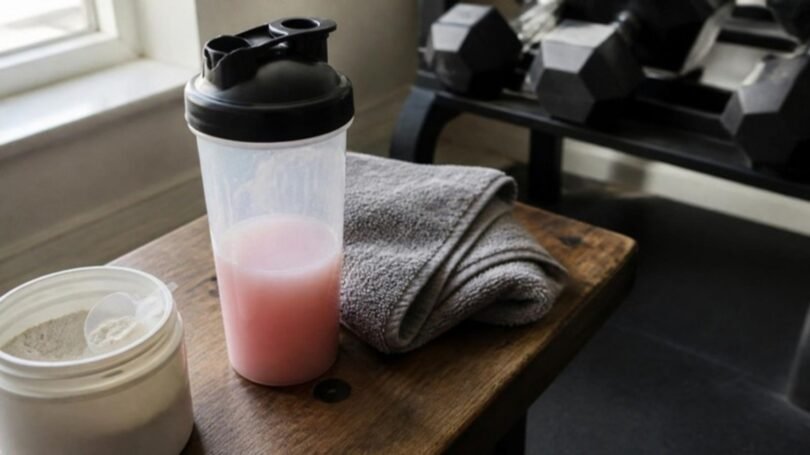
In short: L-citrulline is an amino acid your body turns into arginine and then nitric oxide, a molecule that helps blood vessels relax. The best-supported L-citrulline benefits are small: a few extra reps in hard lifting sessions and a little less next-day muscle soreness. It doesn’t seem to help endurance exercise, and the evidence that it boosts growth hormone is weak.
L-citrulline shows up in almost every “pump” or pre-workout supplement, often with big promises attached. So what are the real L-citrulline benefits once you look at the studies? Here’s a plain-English look at what the research actually shows, how much people take, and where the evidence is still thin.
What is L-citrulline?
L-citrulline is a “nonessential” amino acid, which simply means your body can make its own. It’s part of the urea cycle, the process your liver uses to clear ammonia (a waste product of breaking down protein), alongside two related amino acids, arginine and ornithine.
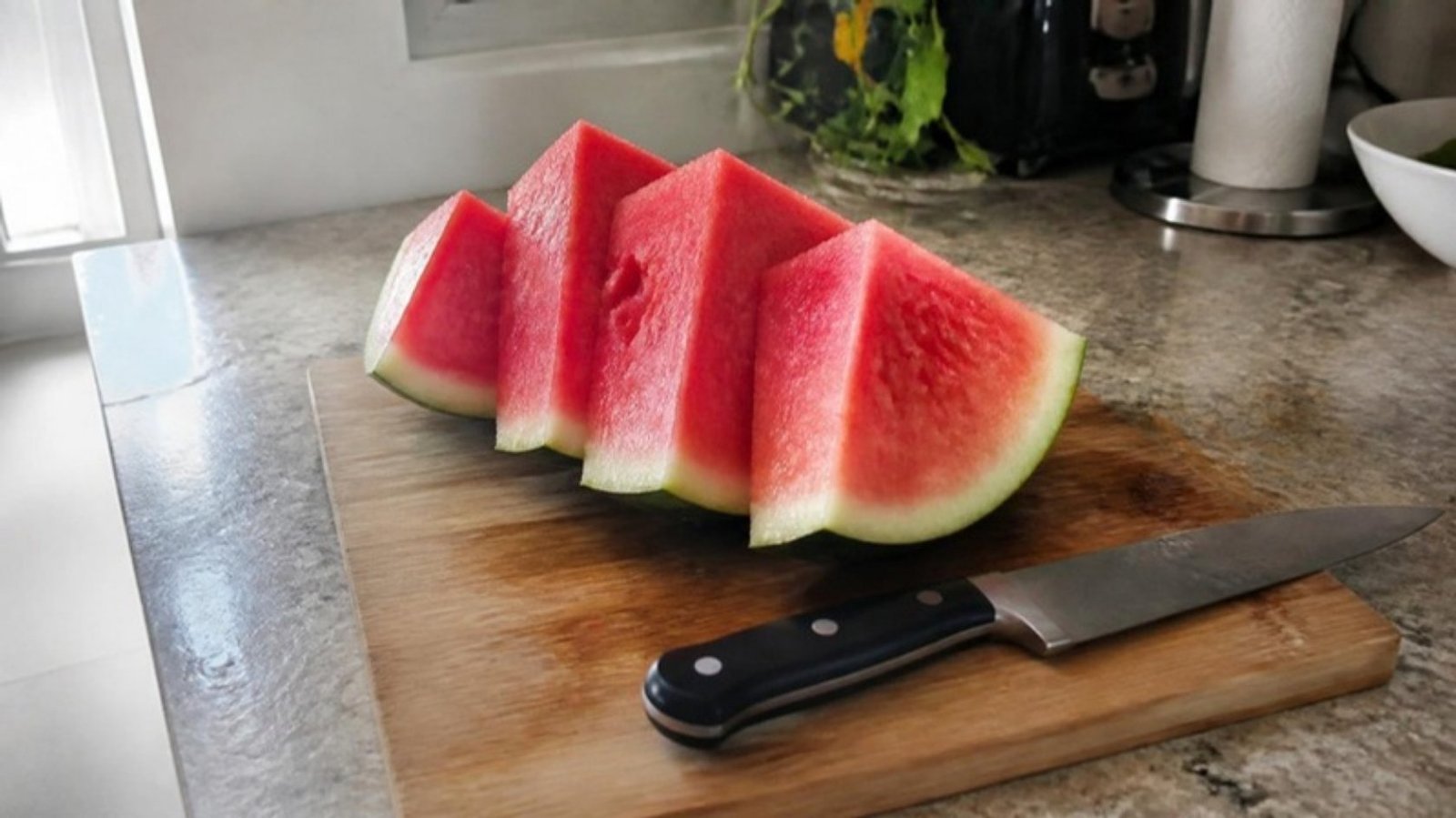
Its name comes from watermelon (Citrullus), the richest known food source. US Department of Agriculture researchers measured roughly 1–2 mg of citrulline per gram of fresh watermelon flesh or rind [1]. That means you’d need to eat around 7 pounds (about 3 kg) of watermelon to match a typical 6-gram supplement dose.
Supplements come in two main forms:
- L-citrulline: the amino acid on its own.
- Citrulline malate: citrulline bound to malate (malic acid), a compound involved in energy production. Products are usually sold as 2:1 or 1:1 blends, so 8 grams of citrulline malate gives you only about 4–5 grams of actual citrulline. Read more about malic acid.
How L-citrulline works: the arginine shortcut
Your body uses arginine to make nitric oxide (NO), which signals blood vessels to widen. You might think taking arginine directly would be the obvious move, but much of an arginine pill gets broken down in your gut and liver before it reaches your bloodstream. Citrulline mostly slips past that breakdown, and your kidneys then convert it into arginine.
In a week-long crossover study in 20 healthy volunteers (each person tried every option), oral citrulline raised blood arginine levels more effectively than the same dose of arginine itself [2]. Another small study of 8 healthy men found citrulline is a potent source of arginine, though the conversion seems to level off at very high doses of 10–15 grams [3]. This is why many researchers now see citrulline as a better way to raise arginine than taking L-arginine supplements.
One important catch: higher arginine and nitric oxide markers in the blood don’t automatically mean better blood flow to your muscles. A 2020 review found the evidence for an actual “pump” or improved muscle blood flow after citrulline is scarce and inconsistent [4].
L-citrulline benefits for strength training
This is where the evidence is strongest, though the effects are modest.
Some early studies looked impressive. In a 2010 crossover trial, 41 men took 8 grams of citrulline malate or a placebo before a chest workout. With citrulline malate they managed more bench press reps in the later sets and reported about 40% less muscle soreness over the next two days [5]. Similar results followed in 12 advanced male weightlifters doing leg exercises [6] and in 15 resistance-trained women doing bench and leg presses [7].
When researchers pool all the studies together, the picture is more modest:
- A 2019 meta-analysis (a study that combines the results of many trials) of 12 studies and 198 people found a small but real benefit for high-intensity strength and power exercise [8].
- A 2021 meta-analysis of 8 studies found that 6–8 grams of citrulline malate taken 40–60 minutes before training increased reps to failure by about 3 reps on average (roughly 6%) [9].
- Another 2021 meta-analysis of 4 trials found no effect on maximal muscle strength in trained adults [10].
Put simply, citrulline malate may help you squeeze out a couple more reps when you train close to failure, but it doesn’t seem to make you stronger on a one-off max lift. The individual studies are also small, usually 10 to 40 people.
Muscle soreness and how hard exercise feels
A 2020 meta-analysis of 13 trials (206 people) found that citrulline lowered “rating of perceived exertion” (how hard a workout feels) and reduced muscle soreness 24 hours after exercise. It didn’t lower blood lactate, and there was no clear effect on soreness at 48 or 72 hours [11].
Does citrulline help endurance exercise?
Probably not. A 2022 meta-analysis of 10 studies found no meaningful benefit of citrulline for aerobic (endurance) performance, oxygen use, or perceived effort [12]. A 2021 review of nitric-oxide-boosting foods also found no performance benefit from citrulline-rich foods like watermelon [13].
Even for repeated sprints, results are mixed. In one study, 10 well-trained men took a large 12-gram dose of citrulline malate and saw no improvement in cycling sprints or time to exhaustion [14]. An older, much-quoted study did find less fatigue and better muscle energy production, but that was 18 men doing finger exercises inside an MRI scanner after 15 days of 6 grams a day [15], which is a long way from a real workout.
Does L-citrulline boost growth hormone?
This claim is often repeated, but it rests on thin evidence. In one study of 17 young cyclists, those who took 6 grams of citrulline malate before a 137 km (85-mile) race had a bigger rise in growth hormone after the race than those who didn’t [16]. But that was a short-lived spike during extreme exercise, and it doesn’t show any effect on muscle growth.
At rest, a study giving healthy men 2 to 15 grams of citrulline found no change in growth hormone or insulin at all [3]. So citrulline isn’t a reliable growth hormone booster.
Muscle building
Citrulline has some interesting effects on protein metabolism, mostly in people who aren’t eating enough protein. In a small pilot study of 8 healthy adults on a low-protein diet for three days, citrulline increased muscle protein synthesis (the process of building new muscle protein) compared with other amino acids [17]. But in 12 well-fed healthy adults, a week of citrulline didn’t change whole-body protein metabolism [18].
A 3-week trial in 24 malnourished older adults (mostly women aged 80 to 92) found no effect on protein synthesis overall, although the women in the citrulline group gained some lean mass [19]. These are early, small studies in specific groups, so they don’t tell us much about whether citrulline helps healthy gym-goers build muscle.
Other L-citrulline benefits: blood pressure, blood vessels and erections
Blood pressure
The results here are mixed. One 2019 meta-analysis of 8 small trials found citrulline (3–9 grams a day) lowered systolic blood pressure (the top number) by about 4 mmHg, with diastolic blood pressure dropping only at doses of 6 grams or more [20]. Another meta-analysis of 5 trials found no significant effect at all [21]. So if there is an effect, it’s probably small, and citrulline isn’t a substitute for blood pressure treatment.
Blood vessel function
A 2022 meta-analysis of randomized trials found that taking citrulline for several weeks slightly improved “flow-mediated dilation,” a measure of how well the arteries widen. Single doses had no effect [22]. That’s a promising sign for blood vessel health, but it doesn’t yet show any reduction in heart attacks or strokes.
Erectile dysfunction
In a small single-blind study of 24 men with mild erectile dysfunction, 1.5 grams of L-citrulline a day for a month improved erection hardness in half of them, compared with 8% on placebo [23]. The authors noted it was less effective than prescription medicines such as sildenafil (Viagra). It’s an interesting early result, but larger studies are needed.
How much L-citrulline do people take?
- For workouts: most positive studies used 6–8 grams of citrulline malate about an hour before training [9].
- As plain L-citrulline: because there’s no malate, smaller amounts (around 3–6 grams) supply a similar amount of citrulline.
- For blood pressure or blood vessel studies: researchers typically used 3–9 grams a day for several weeks [20].
Stacking citrulline with other supplements
Citrulline is often paired with nitrate sources like beetroot, antioxidants, or branched-chain amino acids. A 2020 review found the evidence for these combinations is still limited [4]. One study combining 2 grams of citrulline with glutathione (an antioxidant your body makes) raised nitric oxide markers more than placebo after a workout [24]. That study was co-authored by an employee of a company that makes both ingredients, and it measured blood markers rather than performance.
Side effects and safety
Citrulline seems well tolerated in short-term studies. Healthy men who took single doses of up to 15 grams reported no side effects [3]. The most common complaint is stomach discomfort, reported by about 15% of people in one study using 8 grams of citrulline malate [5].
Most studies lasted only days to a few weeks, so we know less about long-term use. Because citrulline may slightly lower blood pressure, it’s worth checking with your doctor first if you take blood pressure medicine, nitrates for chest pain, or erectile dysfunction medicine, or if you’re pregnant or breastfeeding.
The bottom line
L-citrulline does a good job of raising arginine levels in the blood. The best-supported L-citrulline benefits are a small boost in reps during hard, high-rep strength training and a bit less soreness the next day. It doesn’t appear to help endurance exercise, it isn’t a meaningful growth hormone booster, and its effects on blood pressure and erections are promising but not yet firmly established.
This article is for general information only and isn’t medical advice. Talk to your doctor or another qualified health professional before starting a new supplement. See our medical disclaimer.
References
- Rimando AM, Perkins-Veazie PM. Determination of citrulline in watermelon rind. Journal of Chromatography A. 2005;1078(1-2):196-200. doi:10.1016/j.chroma.2005.05.009
- Schwedhelm E, et al. Pharmacokinetic and pharmacodynamic properties of oral L-citrulline and L-arginine: impact on nitric oxide metabolism. British Journal of Clinical Pharmacology. 2008;65(1):51-59. doi:10.1111/j.1365-2125.2007.02990.x
- Moinard C, et al. Dose-ranging effects of citrulline administration on plasma amino acids and hormonal patterns in healthy subjects: the Citrudose pharmacokinetic study. British Journal of Nutrition. 2008;99(4):855-862. doi:10.1017/S0007114507841110
- Gonzalez AM, Trexler ET. Effects of citrulline supplementation on exercise performance in humans: a review of the current literature. Journal of Strength and Conditioning Research. 2020;34(5):1480-1495. doi:10.1519/JSC.0000000000003426
- Pérez-Guisado J, Jakeman PM. Citrulline malate enhances athletic anaerobic performance and relieves muscle soreness. Journal of Strength and Conditioning Research. 2010;24(5):1215-1222. doi:10.1519/JSC.0b013e3181cb28e0
- Wax B, et al. Effects of supplemental citrulline malate ingestion during repeated bouts of lower-body exercise in advanced weightlifters. Journal of Strength and Conditioning Research. 2015;29(3):786-792. doi:10.1519/JSC.0000000000000670
- Glenn JM, et al. Acute citrulline malate supplementation improves upper- and lower-body submaximal weightlifting exercise performance in resistance-trained females. European Journal of Nutrition. 2017;56(2):775-784. doi:10.1007/s00394-015-1124-6
- Trexler ET, et al. Acute effects of citrulline supplementation on high-intensity strength and power performance: a systematic review and meta-analysis. Sports Medicine. 2019;49(5):707-718. doi:10.1007/s40279-019-01091-z
- Vårvik FT, Bjørnsen T, Gonzalez AM. Acute effect of citrulline malate on repetition performance during strength training: a systematic review and meta-analysis. International Journal of Sport Nutrition and Exercise Metabolism. 2021;31(4):350-358. doi:10.1123/ijsnem.2020-0295
- Aguiar AF, Casonatto J. Effects of citrulline malate supplementation on muscle strength in resistance-trained adults: a systematic review and meta-analysis of randomized controlled trials. Journal of Dietary Supplements. 2022;19(6):772-790. doi:10.1080/19390211.2021.1939473
- Rhim HC, et al. Effect of citrulline on post-exercise rating of perceived exertion, muscle soreness, and blood lactate levels: a systematic review and meta-analysis. Journal of Sport and Health Science. 2020;9(6):553-561. doi:10.1016/j.jshs.2020.02.003
- Viribay A, et al. Effects of citrulline supplementation on different aerobic exercise performance outcomes: a systematic review and meta-analysis. Nutrients. 2022;14(17):3479. doi:10.3390/nu14173479
- d’Unienville NMA, et al. Effect of food sources of nitrate, polyphenols, L-arginine and L-citrulline on endurance exercise performance: a systematic review and meta-analysis of randomised controlled trials. Journal of the International Society of Sports Nutrition. 2021;18(1):76. doi:10.1186/s12970-021-00472-y
- Cunniffe B, et al. Acute citrulline-malate supplementation and high-intensity cycling performance. Journal of Strength and Conditioning Research. 2016;30(9):2638-2647. doi:10.1519/JSC.0000000000001338
- Bendahan D, et al. Citrulline/malate promotes aerobic energy production in human exercising muscle. British Journal of Sports Medicine. 2002;36(4):282-289. doi:10.1136/bjsm.36.4.282
- Sureda A, et al. L-citrulline-malate influence over branched chain amino acid utilization during exercise. European Journal of Applied Physiology. 2010;110(2):341-351. doi:10.1007/s00421-010-1509-4
- Jourdan M, et al. Citrulline stimulates muscle protein synthesis in the post-absorptive state in healthy people fed a low-protein diet – a pilot study. Clinical Nutrition. 2015;34(3):449-456. doi:10.1016/j.clnu.2014.04.019
- Thibault R, et al. Oral citrulline does not affect whole body protein metabolism in healthy human volunteers: results of a prospective, randomized, double-blind, cross-over study. Clinical Nutrition. 2011;30(6):807-811. doi:10.1016/j.clnu.2011.06.005
- Bouillanne O, et al. Impact of 3-week citrulline supplementation on postprandial protein metabolism in malnourished older patients: the Ciproage randomized controlled trial. Clinical Nutrition. 2019;38(2):564-574. doi:10.1016/j.clnu.2018.02.017
- Barkhidarian B, et al. Effects of L-citrulline supplementation on blood pressure: a systematic review and meta-analysis. Avicenna Journal of Phytomedicine. 2019;9(1):10-20. PubMed 30788274
- Mirenayat MS, et al. Effect of L-citrulline supplementation on blood pressure: a systematic review and meta-analysis of clinical trials. Current Hypertension Reports. 2018;20(11):98. doi:10.1007/s11906-018-0898-3
- Smeets ETHC, Mensink RP, Joris PJ. Effects of L-citrulline supplementation and watermelon consumption on longer-term and postprandial vascular function and cardiometabolic risk markers: a meta-analysis of randomised controlled trials in adults. British Journal of Nutrition. 2022;128(9):1758-1770. doi:10.1017/S0007114521004803
- Cormio L, et al. Oral L-citrulline supplementation improves erection hardness in men with mild erectile dysfunction. Urology. 2011;77(1):119-122. doi:10.1016/j.urology.2010.08.028
- McKinley-Barnard S, et al. Combined L-citrulline and glutathione supplementation increases the concentration of markers indicative of nitric oxide synthesis. Journal of the International Society of Sports Nutrition. 2015;12:27. doi:10.1186/s12970-015-0086-7